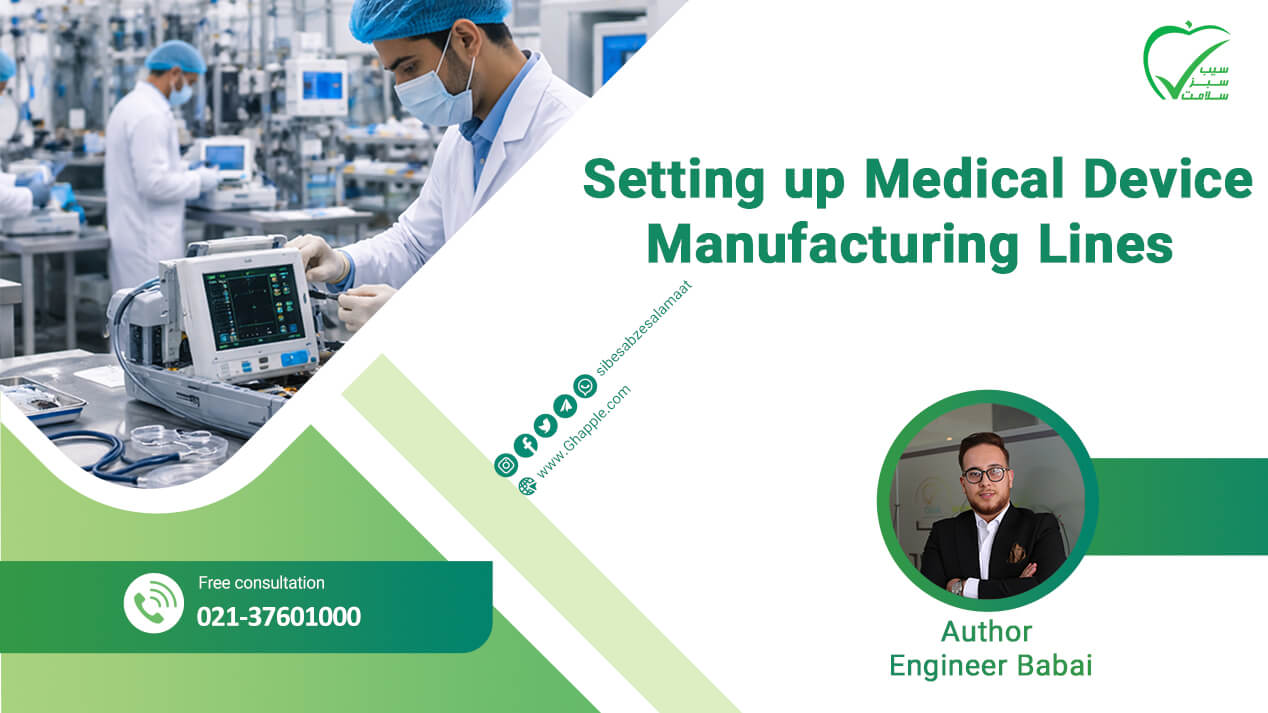
The medical device industry is one of the most dynamic and strategically important sectors in global healthcare. In recent years, setting up medical device manufacturing lines in Iran has gained increasing attention due to growing domestic demand, government support for local production, and the need to reduce reliance on imports. Iran offers a unique combination of skilled human resources, industrial infrastructure, and access to regional markets, making it an attractive destination for medical device manufacturing
Why Iran Is a Strategic Location for Medical Device Manufacturing
Iran’s healthcare system serves a population of over 80 million people, creating consistent demand for medical devices ranging from basic consumables to advanced equipment. Establishing medical device manufacturing lines in Iran provides several key advantages:
Reduced dependency on imported medical devices
Lower production and logistics costs
Faster access to the local healthcare market
Opportunities for regional exports to the Middle East and Central Asia
These factors position Iran as a competitive manufacturing hub in the medical device sector
Regulatory Framework and Compliance
A critical step in setting up medical device manufacturing lines is compliance with national and international regulations in iran. In Iran, manufacturers must obtain approval from the Iranian Food and Drug Administration (IFDA). Compliance with global quality standards is essential, including:
ISO 13485 for medical device quality management systems
Good Manufacturing Practice (GMP) requirements
Product registration and post-market surveillance regulations
Meeting these standards not only ensures product safety but also facilitates export opportunities

Infrastructure and Production Requiremen
Successful medical device manufacturing in Iran depends heavily on proper infrastructure and technology. Key requirements include:
Manufacturing facilities designed according to cleanroom standards
Specialized production and assembly machinery
Quality control and testing laboratories
Reliable supply chains for raw materials and components
Investment in modern equipment and efficient production workflows directly impacts product quality and market competitivene
Skilled Workforce and Technical Expertise
Iran benefits from a strong base of engineers, technicians, and medical professionals with expertise in biomedical engineering and related fields. A well-trained workforce is a major asset when setting up medical device production lines. Continuous training, technology transfer, and collaboration with research institutions help manufacturers maintain high standards and drive innovation

Challenges and Market Opportunities
While setting up medical device manufacturing lines in Iran presents challenges such as currency fluctuations, regulatory processes, and sourcing certain raw materials, these challenges are balanced by significant opportunities:
Strong government support for domestic manufacturing
Growing demand driven by population growth and aging
Competitive production costs compared to many regional markets
Increasing potential for export-oriented manufacturing
Companies that adopt long-term strategies and local partnerships can successfully navigate these challenges
Conclusion
Setting up medical device manufacturing lines in Iran represents a valuable opportunity for companies seeking growth in emerging healthcare markets. With proper regulatory compliance, investment in infrastructure, and utilization of local expertise, manufacturers can build sustainable operations that serve both domestic and regional markets. As healthcare demand continues to rise, Iran’s role in the medical device manufacturing landscape is expected to expand significantly